
This page is still “in process”. Many of the Errors presented to children in school are distortions of Virtues. What Catholics consider Virtues, the Public Schools teach under a Curriculum “Social/Emotional Learning” (SEL). Public Schools cannot or will not teach morality through the lens of God and therefore teach evasions, half-truths and euphemisms. SEL Curricula do not refer to “virtues”, but instead “competencies”. A careful discussion of each of the Virtues will show the fallacies of the ideas presented in SEL Curricula and the limitations of teaching “skills” or “competencies” over God-centered character formation and relationship building.
“Teacher, which commandment in the law is the greatest?” He said to him, “You shall love the Lord, your God, with all your heart, with all your soul, and with all your mind.
This is the greatest and the first commandment. The second is like it: You shall love your neighbor as yourself. The whole law and the prophets depend on these two commandments.”
Matthew 22:36-40
This Truth known as the Golden Rule has been recognized by humankind throughout history. It is this Order that brings peace in relationships and society. It is far superior to a philosophy of Justice, Equity, Diversity and Inclusion that can be manipulated for political reasons.
The Catechism of the Catholic Church defines Human Virtues:
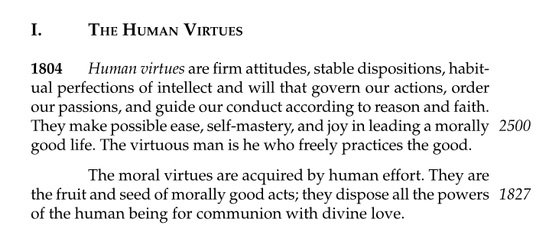
Human Virtues “are acquired by human effort” as opposed to “Theological Virtues (Faith, Hope, and Charity)” that “are infused within us as gifts from God.”
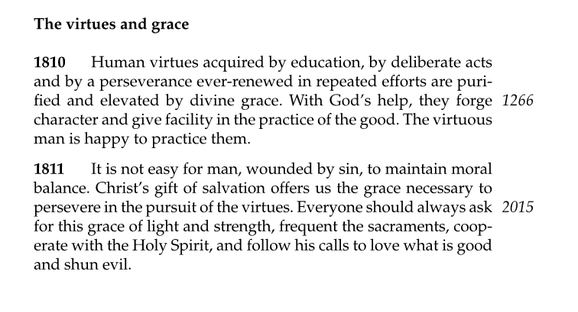
The Catechism of the Catholic Church makes clear the need of Grace in developing Human Virtues:
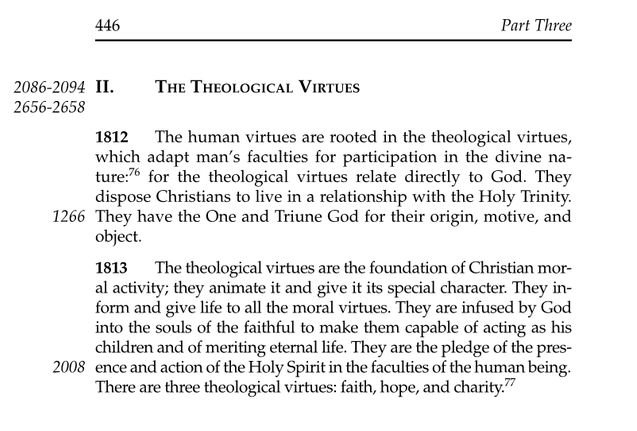
Theological Virtues: Further discussion to be added with commentary reflecting on the modern interpretations of traditional Virtues presented in Social/Emotional Learning. Discussing Virtues without the Grace of God, give students only part of the Truth and therefore, can cause harm.
Faith
Hope
Charity
Cardinal Virtues:
Prudence
Justice
Fortitude
Temperance
 parentsoutofexile